

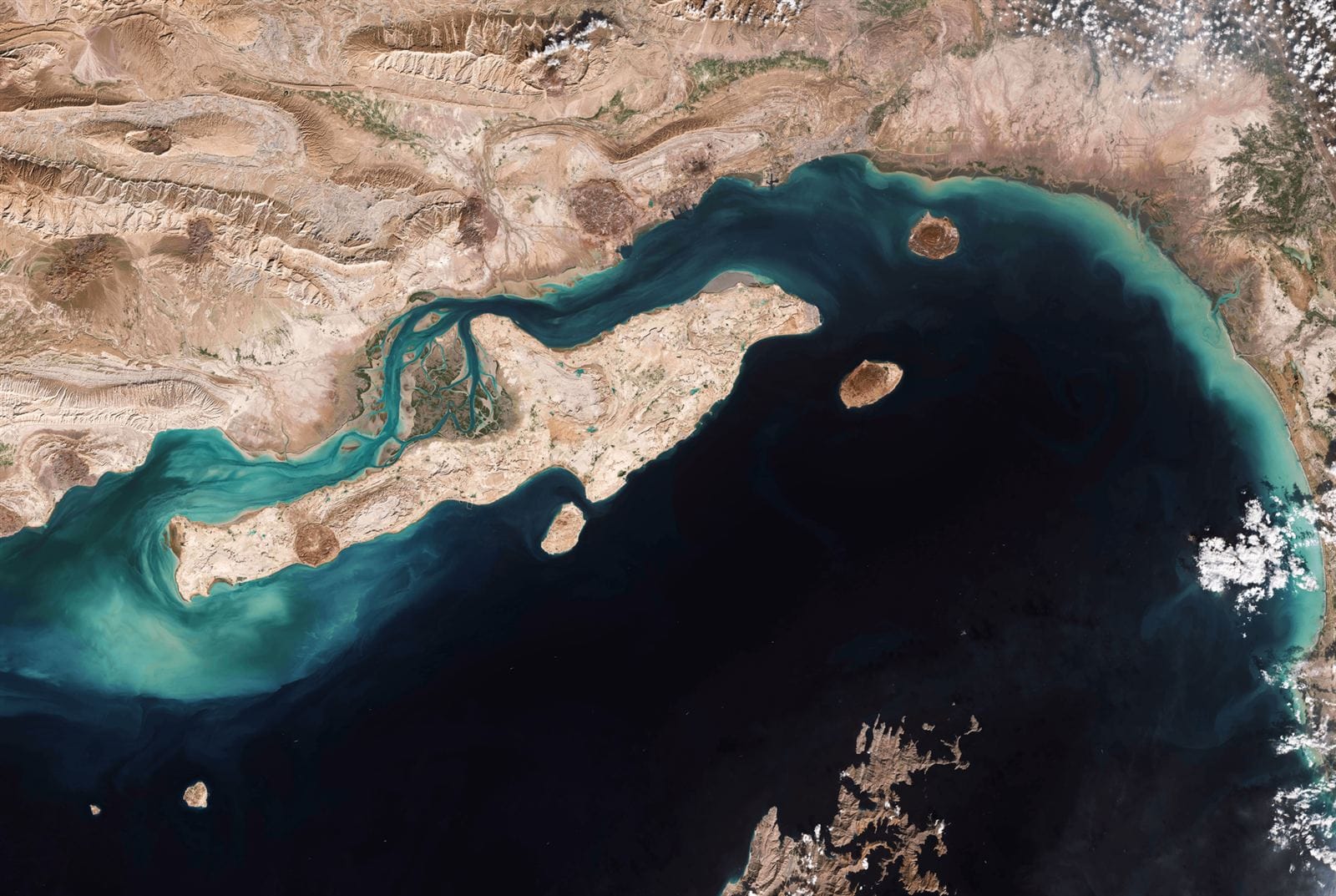
The Strait of Hormuz is a 33-kilometre-wide channel connecting the Persian Gulf to the open ocean — and the single most important energy chokepoint on earth. Understanding why requires only three numbers: a fifth of global oil, a third of global LNG, and one strait.
The geography
The Gulf states — Saudi Arabia, Iraq, the UAE, Kuwait, Qatar and Iran itself — sit on some of the world’s largest oil and gas reserves, but their only deep-water export route is through the strait. Tankers leaving the Gulf must pass within sight of the Iranian and Omani coasts. Every barrel loaded in the Gulf, and nearly every cargo of Qatari LNG, transits those 33 kilometres.
The numbers are staggering: roughly 20 million barrels of oil and petroleum products pass through daily, alongside LNG volumes that supply markets across Asia and Europe. The strait is not just an energy route; it is the world economy’s fuel line.
Why it is a chokepoint
A chokepoint is a place where trade can be interrupted by a small amount of force. At Hormuz, the geography makes the interruption feasible: a narrow shipping lane, shallow waters on the Arabian side, and one state — Iran — holding one of the two coastlines. Threats to “close” the strait have been a recurring feature of Iranian statecraft for decades, and each escalation has moved oil markets before a single vessel was touched.
The key insight is that the strait’s economic power is in the threat, not the act. Market prices react to the possibility of disruption, so even limited incidents — a seized tanker, a naval exercise, a drone encounter — raise the global price of energy. The world pays the insurance cost of the strait’s vulnerability every day, whether or not anything happens.
The alternatives
Alternatives exist but are partial. Saudi Arabia and the UAE have cross-country pipelines that bypass the strait, but their combined capacity replaces only a fraction of the daily flow. That margin is exactly what makes the strait strategically decisive: it cannot be replaced, only made less urgent. The world’s energy transition is slowly reducing dependence on Gulf oil, but the transition will take decades — and in the meantime, every improvement in alternative capacity reduces, without eliminating, the strait’s leverage.