

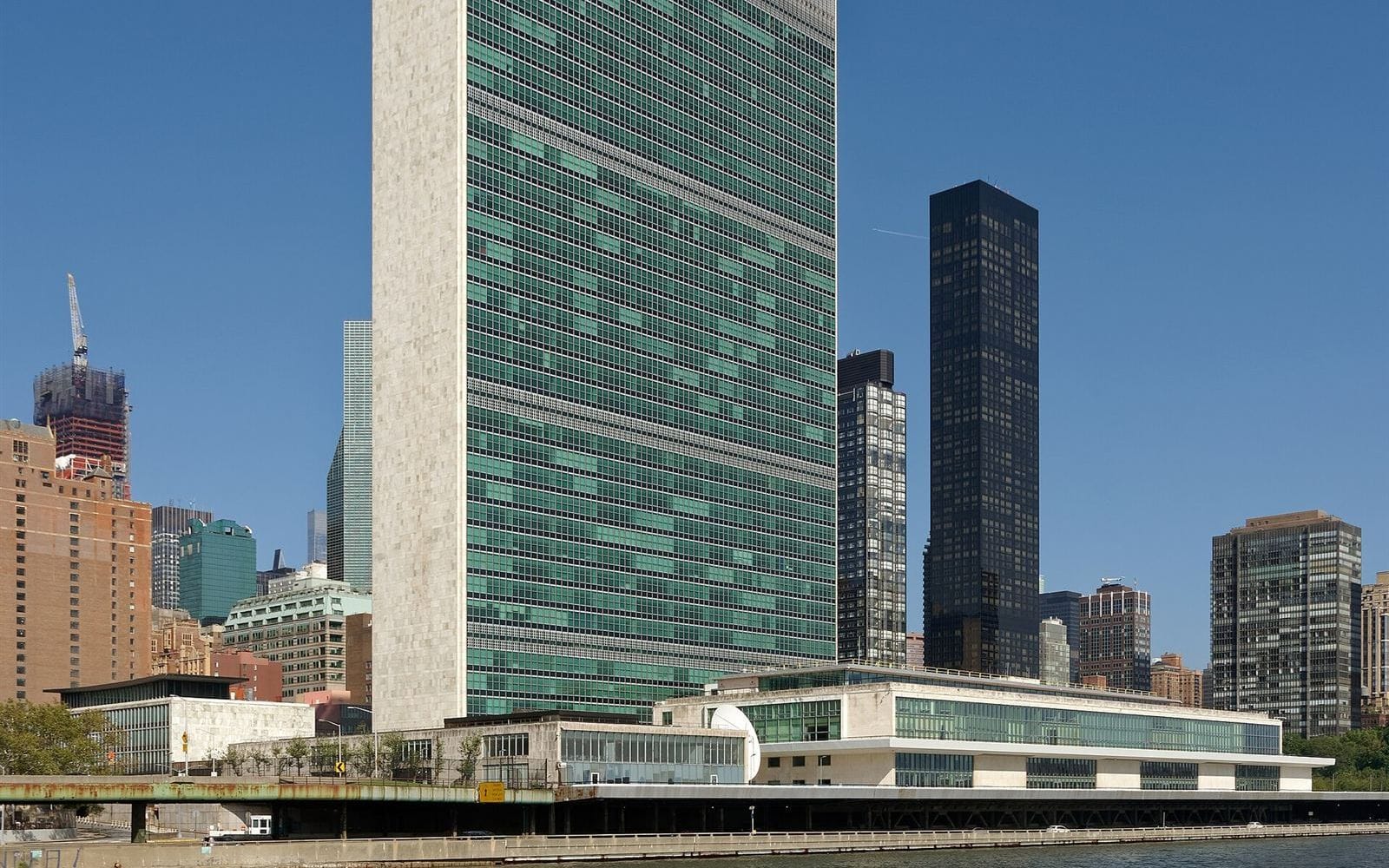
The UN Security Council is the only body in the world whose decisions are binding on every member state of the United Nations. It is also a museum of the moment it was created: a committee of the victors of 1945, preserved in aspic, charged with keeping a peace that its own structure keeps fracturing.
The structure
The council has fifteen members. Five are permanent — the United States, Russia, China, France and the United Kingdom, the principal victors of the Second World War — and hold the veto: each can kill any substantive resolution alone. Ten are elected by the General Assembly for two-year terms, distributed by region, giving smaller states a rotating voice and a share of the council’s prestige.
Substantive decisions require nine votes in favour and no veto from any permanent member. Because the veto covers everything substantive, the council’s machinery is designed around the possibility of deadlock — which is why so much of its work happens below the level of formal resolutions: statements, briefings, informal consultations and the quiet negotiation of texts that can actually pass.
What it can do
When it agrees, the council’s powers are extraordinary. It can authorise sanctions binding on all states, mandate peacekeeping operations, establish tribunals, and — under Chapter VII of the Charter — authorise the use of force. That last power is the one that matters: no other institution in the world can legally authorise the international community to act.
When it cannot agree, those powers remain on paper. The veto has been used hundreds of times, overwhelmingly by the permanent members to protect their own interests or those of their clients. The result is a council that is at once the most powerful institution in international law and a recurring exhibit in the case against that law’s effectiveness.
The reform debate
The mismatch between the council’s 1945 composition and the 2026 world is the oldest argument in the United Nations. The candidates are familiar: the permanent membership does not reflect the rise of the global south, the African continent has no permanent seat, and the veto makes the council hostage to the permanent members’ rivalries. Reform requires the consent of the permanent members themselves — a veto-proof impossible circle.